Plan, script, foresee, guess, assume, predict...Plan, script, foresee, guess, assume, predict…Plan, script, foresee, guess, assume, predict…
Published on 14 September 2026 • Written by Joppe Quaedvlieg and Dr Lisa Colledge
A version of this article was published in HRZone.

A real story of neurodivergent workplace experience, and what it reveals about cognitive load, leadership design, and building high-performing teams.
This story is based on a real interview, conducted by Joppe, with a neurodivergent professional. It reflects Sandra’s lived experience of navigating a working day.
Sandra’s name has been changed for privacy reasons. The words and experiences are real.
Read it slowly.
…
She takes out the pack of sleeping medication, breaks one pill in half. Her hand pauses in front of her lips. Tomorrow she has to get up earlier because James rescheduled the meeting.
“Tomorrow there will be rush hour and when there is rush hour all the seats are taken and it gets too busy on Alterstraat and maybe Johnny will be late today and I can go straight to my office but if he is…”
“Sandra?, Saaandra?” Her boyfriend calls her name and her body jerks with shock. Blood rushes through her veins, and her lips dry up. “You alright?" He asks. She nods the smallest of nods before getting into bed and taking her laptop.
She opens her calendar as she slowly but steadily goes through the calendar of every colleague. One by one, she scans who will be at the office.
“When what room in till when who are they meeting with what will they need will I be what if I am early am I dressed properly…”
As thought after thought rushes in like electricity through a glass fiber cable, the sleeping medication starts to do its job as she thinks about tomorrow.
“The bus honks the people brush shoulders children crying dogs barking and smell of garbage”
Her body is drifting into a medicated dream.
“What will happen in the morning? What will happen during the day? What will happen in the week and during pilates? What about next year? What about in Spain? What about?
“Plan, script, foresee, guess, assume, predict...”
She pictures that she can fly. Fly high above the people and the things, the bleeps and the bloobs. Fly over daily life and be, be her.
---------
This is a real story, written by Joppe Quaedvlieg based on discussion with ‘Sandra’ about her lived experience. The following leadership analysis was prepared by Lisa Colledge.
---------
If Sandra works in your organization, what does this mean for outcomes, for leadership, and for the way work is designed?
Three practical lessons for managers stand out from Sandra's experience. Each has direct implications for how we coordinate, how we lead, and how much performance we may be unintentionally leaving on the table.
Insight 1: Reduce unnecessary cognitive load
Sandra isn't resisting work – she's trying to reduce the unexpected so she can contribute at her best.
She checks calendars, rehearses conversations and models multiple scenarios because uncertainty carries a high cognitive cost for her. Energy that could be invested in creativity, judgement or problem-solving is instead diverted into preparing for ambiguity.
Some uncertainty is inevitable. But when expectations, priorities or ways of working remain unnecessarily unclear, organizations create additional cognitive load that affects everyone, while disproportionately affecting people who naturally process uncertainty more intensely.
Reducing avoidable ambiguity allows people to invest more of their thinking in the work itself.
What managers can do
Reduce unnecessary uncertainty. For example:
Minimizing avoidable last-minute changes.
Sharing agendas and expected contributions before meetings.
Encouraging clarification rather than expecting people to guess.
Insight 2: Recognize that performance starts before the working day begins
Sandra's working day begins long before she arrives at the office. Before she gets out of bed, she is already mentally rehearsing the day ahead. The racing thoughts, the crowded bus, the need for medication, are signs that her nervous system is already working hard before the day has properly begun.
By the time work begins, part of her cognitive and emotional energy has already been spent. Over time, this shows up as fatigue, reduced concentration, lower tolerance for further interruptions, or behavior that colleagues mistakenly interpret as disengagement.
Sandra's experience is particularly vivid because it relates to neurodivergence, but many people begin the working day carrying invisible load. They may be balancing caring responsibilities, navigating a long commute, worrying about a difficult client meeting, or recovering from a poor night's sleep.
Leaders cannot remove all these pressures, but they can recognize that people do not all arrive with the same reserves of energy.
What managers can do
Recognize that people work best in different ways. Proactively learn what helps people contribute at their best by asking questions such as:
When do you find work most draining?
What conditions help you do your best work?
Is there a small change that would make it easier for you to contribute consistently?
These conversations often reveal improvements that strengthen the whole team's performance.
Insight 3: Create conditions for sustainable contribution
Sandra has learned how to cope. She succeeds by constantly adapting, anticipating and often masking her natural way of working. While that approach to performance can be sustained for a time, it usually comes at a cost to energy, creativity, and long-term wellbeing.
Coping is not the same as thriving.
When people spend significant energy masking how they naturally think, communicate or solve problems, organizations lose some of the originality and insight those people were hired to bring.
What managers can do
As a first step, the goal is to design teams where different people can contribute their strengths without carrying unnecessary hidden effort. Individual reasonable adjustments may still be needed, but they should sit within a wider team culture that already reduces avoidable friction. For example:
Value thoughtful contributions, not only quick responses.
Offer different ways for people to participate, including written input where appropriate.
Make conversations about how people work best a normal part of leadership, not something reserved for people who are struggling.
Conclusion
Sandra's story reminds us that inclusion is not only about accommodating individuals. It is about proactively designing work so people can contribute more of what they are capable of.
Sandra’s experience highlights important lessons for neuro-inclusive leadership and how we design team performance systems. Clearer expectations, more predictable communication and open conversations about how people work best do not lower standards – they raise the quality of contribution across the whole team.
Joppe Quaedvlieg
Descriptive Communication specialist. CEO of Artiqula.com.
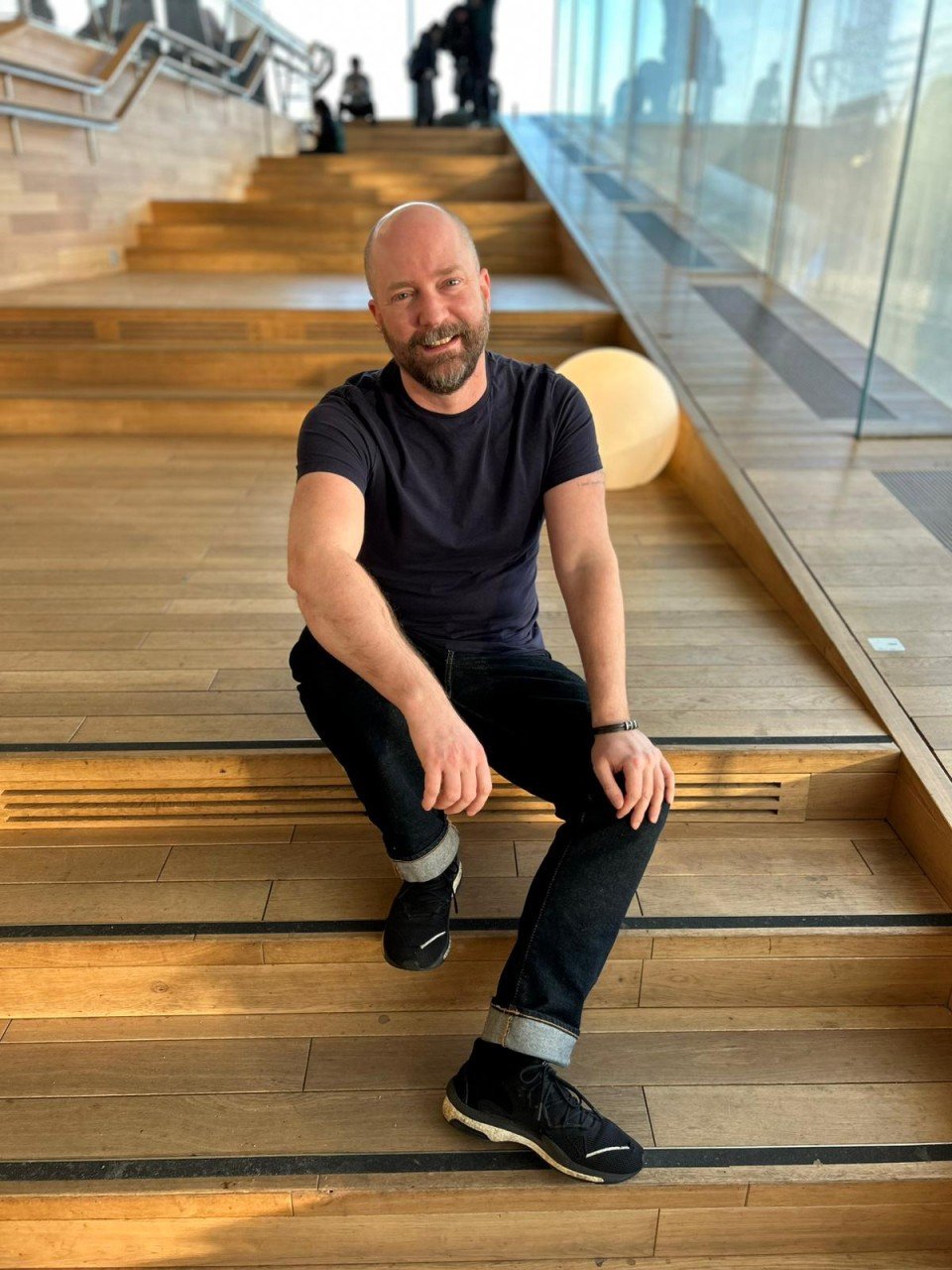
If we need anything from one another or wish for something for ourselves or them, it always has to be communicated. Without communication, without the ability to listen and express, there is no movement between a fellow human and us.
By expressing ourselves in such a way that the other can understand us, and to be able to listen while making the other feel heard, we create, maintain, and evolve connection. We, eventually, build something bigger than we could have done by ourselves.
This is what I have practiced my whole life, every second, of every hour, of every day. In the end, people became a language of their own to me. A language I learned to speak, physically perform, and understand in body, mind, and soul.
This put me on a path, a mission to take language and help myself and you.
Dr Lisa Colledge
Neuro-inspired systems consultant and CEO of Lisa Colledge Consulting.

Lisa’s work focuses on how working systems and leadership design shapes who gets to contribute and how well teams perform. Her interest in neuro-inspired leadership began at home, as the parent of two children with very different neurostyles, one autistic. What she learned there reshaped how she understood performance at work.
Small changes inspired by autism – greater clarity, flexibility, and fairness in how work is coordinated – transformed how her teams collaborated and delivered. The benefits extended far beyond the autistic individuals she originally expected to support: engagement improved, misunderstandings decreased, and decision-making and adaptability strengthened across the whole team.
Since then, Lisa has explored the science behind cognitive diversity and developed a practical approach for applying neuro-inclusive design across organizations and sectors. From designing responsible research-performance frameworks in academia to leading large-scale cultural transformation inside a global corporation, she has repeatedly seen the same pattern: when systems are designed to work with cognitive difference, teams perform more healthily and more effectively.