
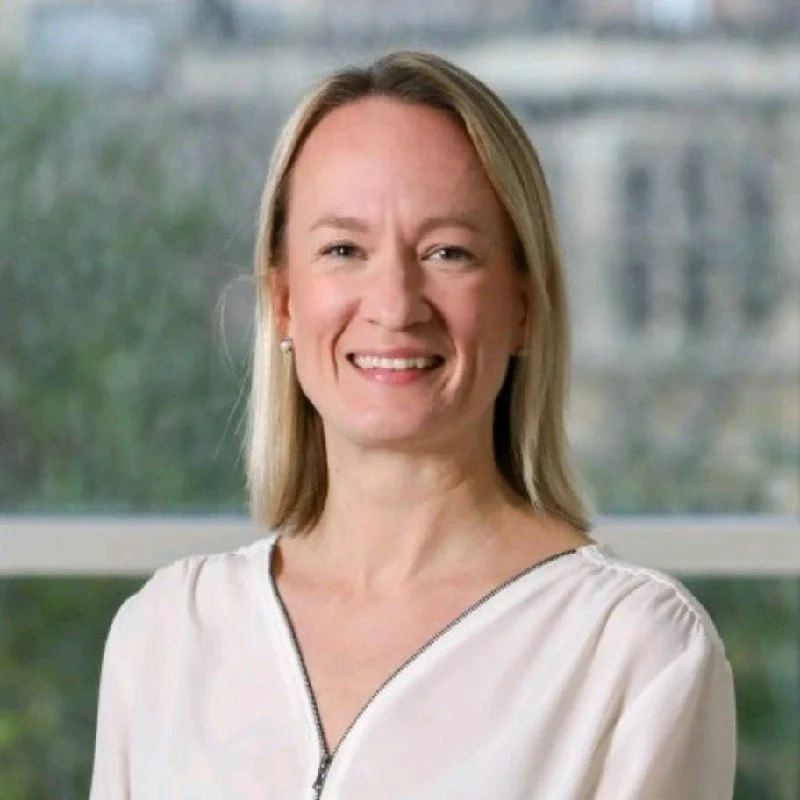
I’m Dr Lisa Colledge.

At Elsevier, I helped take SciVal from concept to product as part of its founding team, specializing in the responsible use of research metrics and leading the Snowball Metrics program, through which universities agreed shared standards for international benchmarking using their own data. I later served as Chief of Staff for Research Marketing and led transformation across a 140-person global function. I also co-chaired Enabled, Elsevier’s disability inclusion network, where I introduced a stronger focus on neurodivergence.
Across these different roles, I repeatedly saw organizations interpret friction as a problem rooted individuals, when the deeper issue was the system through which they were expected to coordinate, contribute and deliver.
I now bring these strands together in a neuro-inspired approach to organizational change. I combine a distinctive perspective with structured, evidence-informed methods to help leaders create team, leadership and organizational systems that give complex work the best chance of succeeding.
I have always loved finding patterns and insights in complex, ambiguous information, then turning what I uncover into something useful.
Today, I use that instinct to help leaders give complex, knowledge-intensive work the best chance of producing the outcomes they want to see.
My career began in research, and I have worked in laboratories at the Universities of Oxford, Leiden and Edinburgh. Since then, I have built and led work across research intelligence and metrics, product and venture development, stakeholder engagement, leadership and organizational change. I have worked with researchers, institutional leaders, professional services teams, funders and corporate leaders across research and other knowledge-intensive environments.
Individual difference and collective genius
My work is driven by a simple belief: performance is not a fixed personal trait – it is a systemic outcome.
That belief emerged through experience – as a leader, a scientist and a parent of two children with very different neurostyles, one of whom is autistic.
I began to see that genuine individual differences were often treated as problems to manage, when the right conditions could transform them into a source of collective genius. At work, the systems people were operating in often made it difficult for those differences to become valuable contributions.
Many of the difficulties attributed to personality or “team chemistry” were actually coordination problems hiding in plain sight.
At home, I learned that my children’s progress didn’t depend on tight control, but on designing clear, supportive guidelines that enabled them to contribute and develop in their different ways. Structure mattered – but so did choice, clarity and trust. Within those boundaries, we could all grow in ways that made sense to each of us.
Out of curiosity, I began applying the same principles at work.
The results went far beyond what I expected.
What began as autism-inspired adjustments did more than support autistic colleagues. I saw engagement improve across teams and functions, misunderstandings reduce, decision quality strengthen, and performance become more consistent, particularly under pressure.
What I initially saw as individual accommodations pointed to a broader performance-design principle: people are better able to contribute when systems acknowledge and support their different ways of processing, communicating and connecting rather than expecting everyone to conform to a single way of working.
That insight changed how I thought about leadership. Leadership is not only a capability held by individuals. It is also shaped by the roles, routines, relationships and conditions that determine whether people can think, decide, adapt and deliver together.
That insight led me to study psychology and the relevant evidence more deeply, and to develop a systematic way of applying neuro-inspired design across teams, functions and organizations. It became the foundation of Neuro-Inspired Teams™ and the Future-Ready Teams Pathway™.
Across global corporate transformations, research environments and leadership roles, I have seen the same pattern repeat.
Neurodivergence did not become a separate specialist area sitting alongside my earlier work. It gave me a unifying design lens for understanding how different people contribute, connect and perform – and what leaders and organizations need to build around them.
When team and organizational systems are designed for cognitive difference, neurodivergent people are supported more effectively, while clarity, coordination and resilience improve for everyone.
What I bring to the work
Make sense of complexity
I use research, evidence synthesis, pattern recognition, evaluation and responsible measurement to distinguish symptoms from causes and identify where action will matter most.
Design with the system and people in view
I trace the interactions, incentives and constraints around the work, and design meaningful participation so the response is shaped by different perspectives.
Turn insight into movement
I translate ambition into clear writing, practical plans, pilots, accountability and measurable progress, using test–learn–adapt delivery to keep change motivating, low-risk and responsive.
How I do this matters just as much as what I do
I aim to be fair and respectful of people’s agency, rigorous without becoming rigid, and persistent enough to find another route when the first one closes. I am ambitious and courageous about change, practical about the next step, and committed to making progress visible so people gain confidence, momentum, and a sense of pride and ownership in the outcomes.
- Dr Sophie Collet, Executive Director – Research, Enterprise and Innovation University of Bristol
“Lisa has the ability to adapt and nuance her approach so it works for you, your team and your context. She really listens not only to what you say, but to the things 'in between', and plays it back in a way that helps you to better understand and explore your own ideas. I come out of conversations with Lisa having carved out protected thinking space, and with a clarity of thought that I didn't have at the start.”


